
For conventions, your shortlist of domain extensions comes down to five options: .com (maximum trust and recall), .events (clear event-sector signal), .vegas (city-specific branding for Las Vegas gatherings), .us (geo-targeting for U.S.-focused events), and .org (nonprofit or association context). Register your primary TLD first, then set up 301 redirects from close variants and common misspellings. ICANN governs how new extensions like .events and .vegas reach the market, and IANA maintains the authoritative root-zone database that confirms each TLD's delegation status. Here is the fast version:
- .com — the default for any convention expecting broad, national, or international attendance; carries the strongest user recognition of any TLD
- .events — purpose-built signal that tells attendees and sponsors exactly what the site is before they click
- .vegas — the sharpest branding play for Las Vegas conventions; pairs naturally with billboard and sponsorship campaigns
- .us — activates Google's geographic targeting for U.S.-only events and regional trade shows
- .org — right fit for associations, nonprofits, and industry bodies running annual conferences
- .net / .co — fallbacks when your preferred .com is taken; functional but carry less brand weight
Pro Tip: Register your primary TLD, then immediately grab the .com equivalent and one or two common misspellings. Redirect them all to your canonical domain. This takes about 30 minutes and protects years of brand equity.
Key Takeaways
The most effective domain strategy for conventions pairs a stable .com or purpose-built TLD with a long-term parent-domain structure, defensive variant registration, and verified platform compatibility before launch.
| Point | Details |
|---|---|
| Secure your primary TLD first | Register .com, .events, or .vegas based on your event's geography and audience, then redirect all variants to one canonical URL. |
| Use subfolders, not new domains, for yearly editions | A parent domain with /2025 and /2026 subfolders preserves SEO authority; a new domain each year resets it. |
| Always check renewal pricing | First-year promos on new gTLDs can be $1–$5; renewals often reach $25–$70, so budget across 3–5 years before registering. |
| Test DNS and analytics before launch | Event platforms require correct CNAME records and may need cookie-banner settings adjusted before tracking pixels fire. |
| GET YOUR VEGAS for Las Vegas events | Lease or acquire a premium .vegas domain through GET YOUR VEGAS to anchor city-based convention branding across digital and billboard channels. |
Table of Contents
- What a domain extension actually is and why it matters for events
- The best domain extensions for conventions, ranked and explained
- How TLD choice affects SEO and attendee discovery
- How to choose the right TLD for your convention
- Common domain mistakes event organizers make
- Why .VEGAS works for Las Vegas conventions
- The part most planners get wrong about domain strategy
- Your Las Vegas convention deserves a .VEGAS domain
- Sources
What a domain extension actually is and why it matters for events
A top-level domain (TLD) is the suffix at the end of a web address, the part after the final dot. IANA maintains the authoritative root-zone database that lists every delegated TLD and its registry operator. Think of IANA as the official record-keeper and ICANN as the policy body that approves new extensions and enforces registry agreements.
For event planners, three TLD categories matter:
Legacy gTLDs (.com, .org, .net) have been around since the 1980s. Attendees recognize them instantly, and they carry no geographic restriction. .com is the default expectation for any commercial or professional event.
Country-code TLDs (ccTLDs) like .us, .uk, and .ca are two-letter codes tied to specific countries. They send a geographic signal to both users and search engines, which is useful for regional trade shows or government-adjacent conferences.
New gTLDs are the extensions created under ICANN's New gTLD Program, launched in the early 2010s. This is where .events, .vegas, .shop, .tech, and hundreds of others live. They offer niche clarity that legacy TLDs cannot. An international convention might default to .com for broad reach, while a city-specific trade show in Las Vegas has a real branding argument for .vegas.
The best domain extensions for conventions, ranked and explained
Here is a detailed look at each recommended TLD, including when it earns its spot and when it does not.
.com
Pros: Unmatched recognition, works for every audience, no geographic restriction, universally supported by every platform and email client.
Cons: Premium names are often taken or listed at auction prices that can run into thousands of dollars.
When to pick it: Any convention expecting attendees from multiple states or countries. If you can secure a clean .com, do it. It is the single most defensible long-term choice.
.events
Pros: Delegated to the DNS root zone in February 2014 under ICANN's New gTLD Program, .events signals purpose immediately. Sponsors and media partners see the URL and understand the context before they visit.
Cons: Lower public recognition than .com; some attendees may pause before clicking an unfamiliar suffix.
When to pick it: Annual industry conferences where the event name is well-known but the .com is unavailable or prohibitively expensive. Works especially well when paired with a strong brand name (e.g., techsummit.events).
.vegas
Pros: Geo-specific, memorable, and pairs perfectly with offline marketing. A .vegas domain on a billboard or convention badge reads as intentional branding, not a fallback.

Cons: Relevant only to Las Vegas events; no value for conventions held elsewhere.
When to pick it: Any convention, trade show, or expo based in Las Vegas. The city's identity is strong enough that the TLD reinforces rather than confuses.
.org
Pros: Trusted by attendees who associate it with nonprofits, professional associations, and academic bodies.
Cons: Using .org for a for-profit event can create a credibility mismatch.
When to pick it: Association annual meetings, nonprofit galas, academic symposia, and industry standards bodies.
.us
Pros: Activates country-level geo-targeting in Google Search, which can improve local and national visibility for U.S.-specific events.
Cons: Restricted to U.S. entities; less recognized than .com by general audiences.
When to pick it: Government-adjacent conferences, regional trade shows, or any event where U.S.-only attendance is a feature, not a limitation.
.net and .co
Functional fallbacks. Both are widely recognized and platform-compatible. Use them when your preferred .com is taken and you need to launch quickly, but plan a migration path to .com if the event grows.
.io and .ai
Carry a strong tech-sector signal. Useful for developer conferences, AI summits, and startup-focused meetups where the audience reads .io as a credibility marker. Renewal pricing on these can run high, so verify before committing.
Pro Tip: Many new gTLDs launch with low first-year promotions then renew at significantly higher rates per year. Always check the renewal rate before you register, not after. A five-year budget for a new gTLD can be several times the first-year rate.
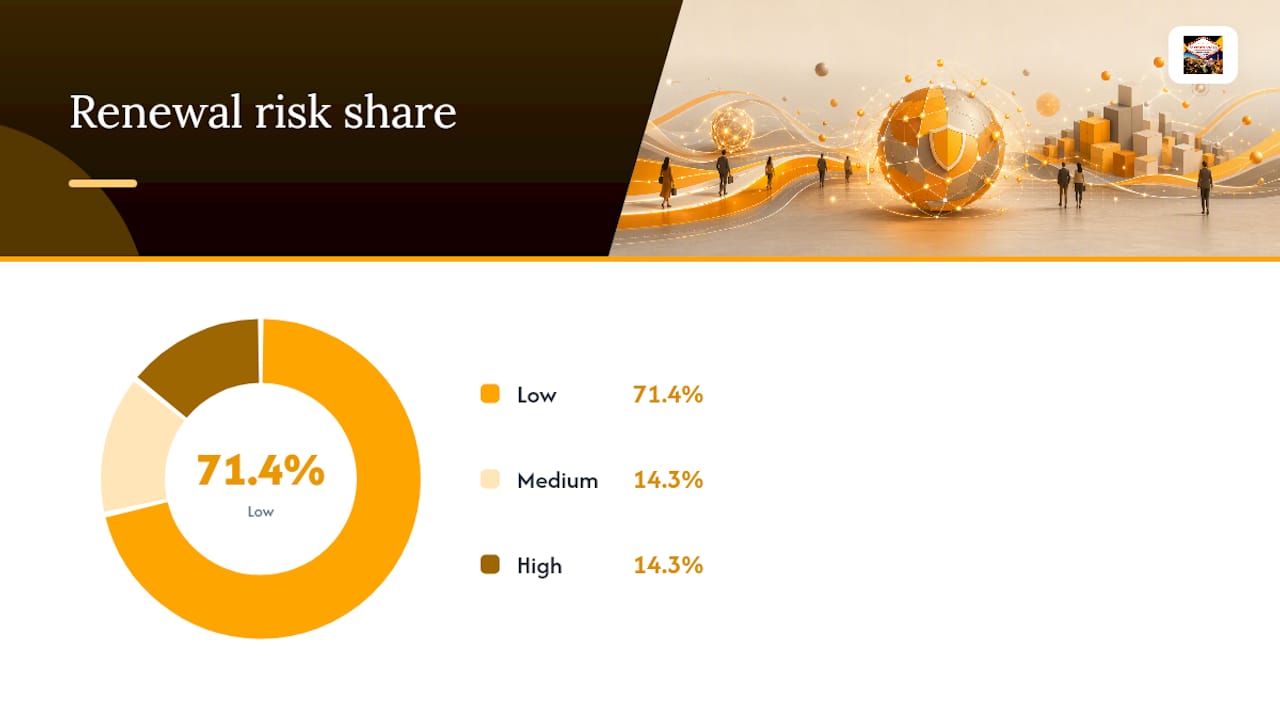
| TLD | Best for | Avg. renewal risk | Geo-targeting |
|---|---|---|---|
| .com | All conventions | Low | None |
| .events | Industry conferences | Medium | None |
| .vegas | Las Vegas events | Low | City-level |
| .org | Nonprofits / associations | Low | None |
| .us | U.S.-regional events | Low | Country-level |
| .net / .co | Fallback / campaign pages | Low | None |
| .io / .ai | Tech / developer events | High | None |
How TLD choice affects SEO and attendee discovery
The core truth: Google treats generic TLDs equivalently for ranking purposes. Choosing .events over .com does not give you a search ranking advantage. The one real SEO lever in TLD selection is the ccTLD geo-targeting signal, where a .us or .uk domain tells Google's systems that the site is primarily relevant to users in that country.
What TLD choice does affect is click-through behavior. Attendees scanning search results make split-second trust decisions. .com carries the strongest user recognition of any extension, which translates to higher click-through rates on branded and non-branded queries alike. A less familiar TLD like .events can perform well once your brand is established, but it may underperform in early campaigns when you are still building name recognition.
Three metrics worth watching after launch:
- Branded search volume (are people searching your event name directly?)
- Direct traffic share (are attendees typing your URL rather than searching?)
- CTR on organic listings (is your TLD helping or hurting click confidence?)
Statistic callout: .com represents the largest share of registered domains globally, and industry reporting consistently places it as the TLD users most readily trust and type from memory.
For most conventions, the practical SEO guidance is: secure the best .com you can, use subfolders for yearly editions rather than new domains, and treat a specialty TLD like .events or .vegas as a branding and redirect layer on top of your canonical .com.
How to choose the right TLD for your convention
Follow this checklist before you register anything.
1. Define your goals first. Brand recall favors .com. Geographic targeting favors a ccTLD. Sector signaling favors .events or .vegas. Pick one primary goal and let it drive the decision.
2. Check availability and renewal pricing together. Search your preferred name across multiple registrars. Then look up the renewal rate, not just the first-year promo. Domain-market trackers show large gaps between intro pricing and renewal costs on many new gTLDs.
3. Budget for 3–5 years. A .com at $12–$15 per year is predictable. A new gTLD at $5 year one and $50 year two is a budget surprise. Factor renewals into your event's operating costs from day one.
4. Confirm platform compatibility. Event platforms like RingCentral Events require DNS-level configuration before tracking pixels and analytics will fire correctly. Some platforms also require disabling site-wide cookie banners to enable custom domains. Custom-domain support is often gated behind paid tiers, so verify your platform's requirements before you register.
5. Set up your canonical redirect. Pick one primary domain. All other variants (misspellings, alternate TLDs, the .com if you chose .events as primary) should 301-redirect to it. This consolidates SEO authority and prevents attendee confusion.
6. Configure DNS records (A/CNAME), SSL, and HSTS. Some TLDs like .app and .dev require HTTPS by default. DNS propagation typically takes 24–48 hours; plan your launch timeline accordingly.
7. Reserve close variants. At minimum, grab the .com of your event name and one or two common misspellings. Redirect them all to your canonical domain.
8. Test analytics and email before launch. Send a test registration, confirm the pixel fires, and verify that transactional emails clear spam filters from your new domain.
Statistic callout: DNS propagation typically completes within one to two days, but full global propagation can take up to three days. Build that window into your pre-event launch schedule.
Common domain mistakes event organizers make
Registering a new domain every year is the most expensive mistake in convention domain strategy. Each new domain starts with zero authority, zero backlinks, and zero branded search history. ACM recommends keeping a single parent conference domain and using subfolders for yearly editions (e.g., /2025, /2026). That structure preserves link equity and lets your organic rankings compound over time instead of resetting annually.
Ignoring renewal pricing catches organizers off guard every year. A $2 first-year registration that renews at $60 is a real scenario with some new gTLDs. Always verify the renewal rate at the registrar before completing the purchase.
Skipping DNS and platform compatibility checks causes broken tracking and missed registrations. Custom domain configuration on event platforms requires correct CNAME records and, in some cases, specific platform settings that affect cookie banners and analytics. Test everything in a staging environment at least two weeks before your registration page goes live.
Practical fixes: Set renewals to auto-renew. Archive past event years under subfolders on your parent domain rather than letting old domains expire. Test your ticketing and analytics setup end-to-end before announcing the event URL publicly.
Why .VEGAS works for Las Vegas conventions
A .vegas domain does something a .com cannot: it tells every attendee, sponsor, and exhibitor exactly where the event lives before they read a single word of copy. That geographic signal carries real weight in offline channels too. A .vegas URL on a convention badge, a printed program, or a Las Vegas Strip billboard reads as intentional, city-native branding.
Consider a practical setup for a Las Vegas trade show:
Example structure: yourevent.vegas as the canonical domain, with tickets.yourevent.vegas redirecting to your ticketing platform and exhibitors.yourevent.vegas pointing to your exhibitor portal. All alternate TLDs (yourevent.com, yourevent.events) 301-redirect to the .vegas canonical. This keeps SEO authority consolidated while giving sponsors and partners a memorable, city-branded URL to promote.
GET YOUR VEGAS has operated in this space since 2009, offering .VEGAS domain leasing, sales, and auction services alongside billboard advertising options. The WEDDINGS.VEGAS case study shows how a city-specific TLD can anchor both digital and physical marketing for an event brand. For convention planners, the leasing model is particularly useful: you can secure a premium .vegas name without the full upfront acquisition cost, then redirect it to your existing event platform while the brand recognition builds.
For planners who want to pair their domain with Las Vegas outdoor advertising, the billboard and .VEGAS domain strategy is worth reviewing before your next event cycle.
The part most planners get wrong about domain strategy
The conventional wisdom says: pick the most descriptive domain you can find and move on. That advice misses the real risk.
The domain you register in year one becomes the URL on every printed program, every sponsor deck, every email confirmation, and every Google result for the next decade. Changing it later costs you backlinks, branded search volume, and attendee trust. The planners who treat domain selection as a five-minute task are the same ones paying a domain broker three years later to reclaim a name they let expire.
The smarter frame: your convention domain is infrastructure, not a detail. Treat it like your venue contract. Lock it in early, budget for renewals, and build your entire digital presence around one stable canonical URL. If your event is in Las Vegas, a .vegas domain is not a novelty. It is a branding asset that works on a billboard at 65 mph and in a Google search result at the same time.
Your Las Vegas convention deserves a .VEGAS domain
Running a convention in Las Vegas puts you in one of the most competitive event markets in the world. A generic .com with a long, hyphenated name does not cut through. A clean .vegas domain does.
GET YOUR VEGAS offers .VEGAS domain leasing, outright sales, and auction access for event planners who need a premium name without a premium upfront cost. Leasing lets you secure a high-value .vegas name, redirect it to your existing event platform, and start building brand recognition immediately. Pair it with Las Vegas billboard advertising and your event URL appears in front of hundreds of thousands of visitors before they ever open a browser.
Check available names and explore lease options on the GET YOUR VEGAS platform, or make an offer on a specific .vegas name you have in mind. U.S. availability applies; contact the team directly for qualifying details.
Sources
- ICANN
- IANA — Internet Assigned Numbers Authority
- Org vs .com vs .net domain extensions — Squarespace blog
- Conference Web Services — ACM