
Domain name valuation is the process of determining a domain's monetary worth by combining automated appraisal tools, comparable sales data, and expert judgment. You're not guessing. You're building a case. The core insight is this: domain value is the sum of its generic worth (brandability, keyword appeal) plus its traffic value, with the market placing a several-year revenue multiple on that traffic. No single tool gives you the full picture. The most accurate valuations layer multiple signals.
Key appraisal metrics every serious buyer or seller tracks:
- Domain length: Shorter names command higher prices.
- TLD (top-level domain): .com leads; alternatives carry a discount.
- Brandability: Memorability, pronounceability, and emotional resonance.
- Keyword relevance: High-search-volume terms in the name boost appeal.
- Market demand: Buyer interest tied to industry trends and timing.
Which appraisal tools actually help you value a domain?
Three tools dominate the US market for automated domain appraisal: GoDaddy, HumbleWorth, and EstiBot. Each uses a different methodology, and knowing what drives their outputs helps you read the results correctly.
GoDaddy's free domain value appraisal tool analyzes keyword strength, TLD, length, and current market trends to generate an instant estimate. It's widely used as a first pass because of its accessibility and name recognition.
HumbleWorth goes deeper. Its AI model draws on over 20 years of auction data from more than 3 million domains, cross-referenced with search engine popularity signals and registered domain analysis. Crucially, it outputs low, mid, and high estimates with probabilities rather than a single number, which reflects real market uncertainty. You can also paste up to 2,000 domains at once for bulk portfolio valuation.
EstiBot focuses on keyword-based algorithmic scoring and is popular among domain investors who want a fast, data-driven baseline before doing deeper research.
Top features these tools share:
- Algorithmic analysis of keywords, length, TLD, and auction history
- Batch or bulk valuation for portfolio holders
- AI-driven models trained on millions of auction results
- Market trend integration for real-time demand signals
The honest limitation: automated tools often miss brandability premiums and buyer psychology. Use them as a starting point, never a final answer.
What factors actually drive domain name worth?
Domain valuation combines measurable attributes with subjective buyer perception. Here's what moves the needle most:
- TLD: .com domains are the most valuable by a wide margin, trusted and recognized globally.
- Length: Short, memorable .com domains sell at premium prices because they're easier to brand and type.
- Keyword relevance: A domain containing a high-demand search term attracts commercial buyers willing to pay more.
- Brandability: Ease of pronunciation, spelling clarity, and emotional resonance add a subjective premium that algorithms often undervalue.
- Domain age: Older domains carry accumulated trust, backlink history, and SEO authority.
- Traffic: Direct type-in traffic is monetizable and directly factors into the 3–5 year revenue multiple.
- Backlinks: Links from reputable sites signal credibility to both search engines and buyers.
- Market demand: Trends shift fast. The surge in blockchain interest pushed NFTs.com to a multi-million-dollar sale.
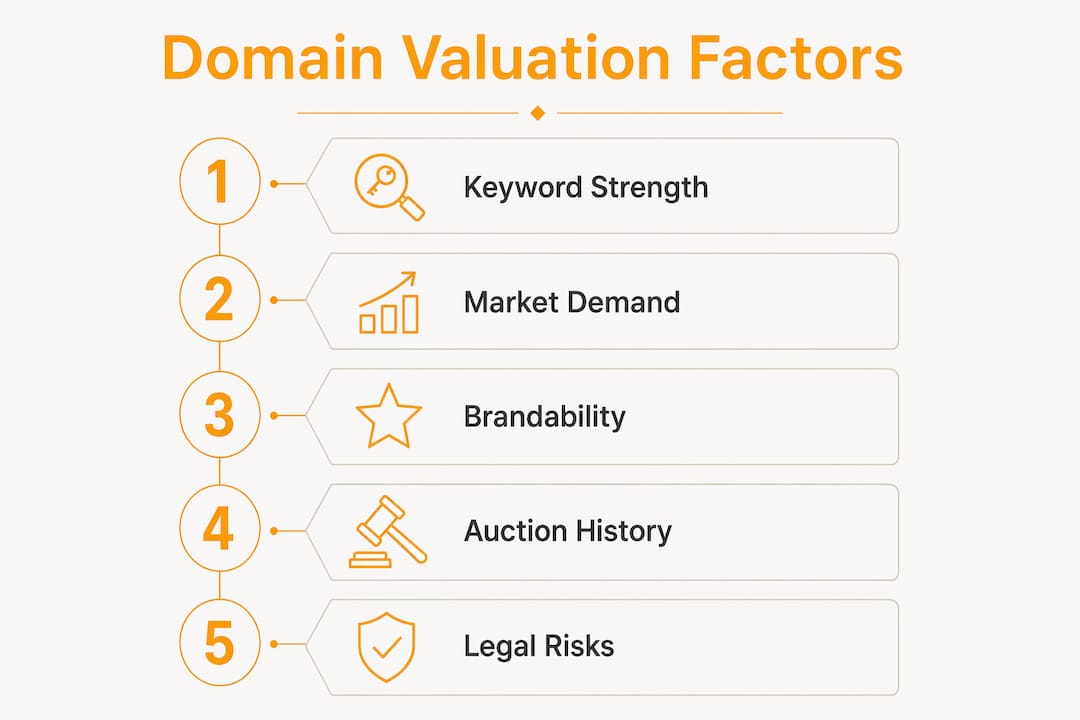
Market demand is the wildcard in understanding the first-party data's role in DTC marketing and how evolving trends affect value. A domain tied to a rising industry can spike in value overnight, and drop just as fast when the trend fades.
How do you set a fair price after getting an appraisal?
Automated estimates give you a range, not a verdict. Advanced AI tools generate low, mid, and high probability bands specifically because domain pricing carries real uncertainty. Your job is to triangulate.
Practical pricing strategies after you receive appraisal results:
- Cross-reference multiple tools. GoDaddy, HumbleWorth, and EstiBot will rarely agree exactly. The overlap zone is your starting anchor.
- Research comparable sales. Databases like NameBio and marketplaces like Sedo track real transaction prices for domains with similar TLD, length, and keywords. Comparable sales beat any algorithm.
- Account for buyer intent. A domain worth $500 to a generic buyer might be worth $50,000 to a company whose brand it matches exactly.
- Factor in market timing. Listing during a hot trend cycle for your domain's niche can double your effective price.
- Never anchor on a single automated number. Tools are notorious for both wild inflation and severe undervaluation.
The market only cares about what similar assets have actually sold for. Prioritize real comps over any tool's estimate.
What should you do right after getting a domain valuation?
A valuation number without a follow-up plan is just a data point. Here's what to do with it:
- Validate across sources. Run your domain through at least two appraisal tools and check one comparable sales database before making any pricing decision.
- Monitor aftermarket databases. Domain market demand fluctuates with industry trends, so check transaction records regularly if you're holding a domain long-term.
- Consider a professional appraisal for premium domains. Experts evaluate SEO metrics, backlinks, market positioning, and brandability in ways algorithms cannot replicate.
- List on auction platforms. The market will tell you what a domain is worth faster than any tool. Auction exposure generates real buyer signals.
- Revisit your valuation periodically. Domain value is liquid. What your domain is worth today may look very different in six months.
Expert insights on domain appraisal and market volatility
Domain appraisal is part data science, part market intuition. Algorithms handle the measurable inputs well: keyword frequency, TLD hierarchy, length, auction history. What they miss is the human side of the transaction.

Brandability adds a premium that no model fully captures. A domain that's easy to say, spell, and remember carries emotional value for a buyer building a brand. That's why expert appraisers go beyond the algorithm to evaluate buyer psychology, industry positioning, and precise market timing.
Domain value is also highly liquid. It can shift quickly as industry trends impact buyer interest, which means a valuation from 12 months ago may be meaningfully stale. Frequent reassessment isn't paranoia. It's good asset management.
Pro Tip: If your domain is short, .com, and tied to a growing industry vertical, get a human expert involved before you price it. Automated tools will almost certainly undervalue the brandability premium, and that gap can represent thousands of dollars.
Key expert viewpoints:
- Subjective premiums (brandability, memorability) consistently exceed algorithmic estimates for premium domains.
- Comparable sales data from real transactions outweighs any single tool's output.
- Market timing and buyer intent can shift a domain's effective value dramatically.
- Cross-validation across tools, sales data, and expert advice minimizes mispricing risk.
Real US market examples that show how valuation works
US domain sales illustrate the range of outcomes that valuation methods must account for. Gambling.com carried a reported $9 million reserve price, reflecting its generic keyword value, .com authority, and massive commercial appeal in a high-revenue industry. FB.com sold as part of an $8.5 million portfolio transaction when Facebook acquired it from Farmers Bureau, a case where trademark alignment and brand fit drove the price far beyond any algorithmic estimate.

At the other end, a domain like a niche local service name might appraise at $200 on EstiBot but sell for $2,000 to a buyer in that specific city who needs the exact match. The gap between tool output and transaction price is where market knowledge earns its keep.
How trademarks and copyrights affect domain value
Legal exposure can destroy a domain's value entirely. A domain that closely resembles a registered trademark is a liability, not an asset. Buyers with legal counsel will walk away, and UDRP (Uniform Domain-Name Dispute Resolution Policy) proceedings can strip ownership without compensation.
Typosquatting domains, those resembling well-known brands with minor spelling variations, carry some market value but also carry serious legal risk under US trademark law. Appraisal tools do not flag trademark conflicts. That due diligence falls on you. Before buying or pricing a domain with a brand-adjacent name, run a USPTO trademark search. A clean legal status is a genuine value driver; unresolved trademark exposure is a discount that no brandability premium can offset.
How domain valuation trends have shifted over time
The domain market has matured significantly. Early valuations leaned heavily on exact-match SEO value, the idea that BestBlueWidgets.com would rank automatically because it matched a search query. Google's algorithm updates largely neutralized that advantage, shifting the premium back to brandability, memorability, and commercial intent.
Auction data now spans decades, and tools like HumbleWorth train on over 20 years of transaction history, which means modern appraisal models are far more accurate than the guesswork of the early 2000s. New TLDs (.io, .ai, .tech) have carved out real market value in specific industries, though .com still commands the highest prices across the board. The rise of digital asset investing has also brought more institutional buyers into the market, pushing premium domain prices higher and making professional appraisal more relevant than ever.
Getyour knows what a premium domain is actually worth

You've done the research. Now put it to work. Getyour specializes in premium .VEGAS domains, and whether you want to lease a domain or acquire one outright, the valuation principles in this guide apply directly. A .VEGAS domain for your Las Vegas business carries brandability, geographic relevance, and market specificity that generic tools will undervalue every time. Make an offer on the domain that fits your brand, and let the market confirm what you already know: the right name is worth the investment.
Key Takeaways
Domain name valuation requires combining automated appraisal tools, real comparable sales data, and expert judgment to arrive at a price the market will actually support.
| Point | Details |
|---|---|
| Value has two components | Generic worth (brandability, keywords) plus traffic value, with a 3–5 year revenue multiple applied to traffic. |
| Tools give ranges, not answers | AI appraisal tools output low, mid, and high estimates with probabilities to reflect real market uncertainty. |
| Comparable sales beat algorithms | Real transaction data from databases like NameBio outweighs any automated estimate for setting a fair price. |
| Legal status affects value directly | Trademark conflicts can eliminate a domain's resale value entirely; always run a USPTO check before pricing. |
| Domain value shifts with trends | Market demand changes fast, making periodic reassessment necessary for any domain held as an asset. |